
How to Safely Remove Bird Nests From External Vents and Prevent Future Blockages

A bird nest in an exterior vent can look harmless at first. A few twigs near a dryer flap or bathroom fan cover may not seem urgent. But inside the duct, nesting material can restrict airflow, trap moisture, overheat equipment, and leave odours or debris behind.
The key is to handle the problem safely, legally, and at the right time. Birds are protected by wildlife laws in Canada, especially during nesting season. That means the best solution is not always immediate removal. Sometimes the safest and most lawful step is to wait, monitor, and call a qualified professional.
This guide explains how to identify a nest in an external vent, what precautions to take, when removal may be allowed, and how to stop birds from coming back.

Why bird nests in external vents need attention
External vents are built to move air out of the home. Dryer vents remove heat and lint. Bathroom fans clear moisture. Kitchen exhaust vents carry grease, steam, and odours outside.
When birds build in or near these openings, the vent may stop doing its job.
A blocked vent can lead to several problems:
Reduced airflow
The appliance or fan works harder, but less air escapes.
Moisture buildup
Bathroom and kitchen vents may leave damp air inside walls or ceilings.
Lint and heat buildup
Dryer vents are already a fire concern when clogged with lint. Nesting material can make airflow even worse.
Odours and pests
Old nesting material can hold droppings, feathers, mites, and insects.
Damage to vent parts
Birds may bend flaps, loosen screens, or pack nesting material deep into the duct.
Nests can also affect the birds themselves. A vent is not a safe nesting place. Heat, moving air, trapped young, or human activity can put them at risk. Safe removal protects the home and avoids unnecessary harm to wildlife.
How to identify a bird nest in an external vent
Do not start by pulling material out of the vent. First, confirm what is happening. A vent can be blocked by lint, leaves, a broken flap, or a nest. These steps help you check without disturbing birds.
1. Watch the vent from a distance
Stand back several metres and observe the vent for 10 to 20 minutes. Early morning and early evening are often active times.
Look for:
Birds flying directly to the vent
Birds carrying grass, twigs, moss, or feathers
Repeated trips in and out
Chirping from inside the wall or duct
A bird sitting near the vent opening
If birds are entering the vent often, assume the nest may be active.
2. Check which vent is affected
Identify the vent before taking action. Common exterior vents include:
Vent type | What to look for | Why it matters |
Dryer vent | Lint, warm air, flap stuck open | Higher heat and lint risk |
Bathroom fan vent | Moist air, small wall or roof outlet | Moisture may back up indoors |
Kitchen exhaust vent | Greasy residue, strong cooking smells | Grease and debris can collect |
Soffit or attic vent | Birds near roofline or eaves | May connect to attic space |
If you are not sure which appliance connects to the vent, turn on one fan or appliance at a time and check for airflow outside. Do this only if the vent is not clearly active with birds.
3. Look for signs around the opening
Use your eyes first. Do not put your fingers into the vent.
Common signs include:
Loose twigs or grass hanging from the grille
Feathers caught in the flap
Droppings below the vent
A vent flap that stays open
Scratching or rustling sounds inside the wall
Reduced airflow when a fan or dryer runs
For high vents, use binoculars from the ground. Avoid climbing unless you have proper equipment and stable footing.
4. Check from inside the home
A nest may cause indoor symptoms before it is visible outside.
Pay attention to:
Clothes taking longer to dry
A dryer that feels hotter than usual
A bathroom mirror staying foggy longer
A fan that sounds strained
A musty or animal-like smell near the vented room
If a dryer shows signs of poor airflow, stop using it until the blockage is assessed. Heat and trapped lint are not worth risking.
5. Decide whether the nest may be active
An active nest may contain eggs, chicks, or adults caring for young. You might not see inside the vent, so rely on behaviour.
Treat the nest as active if:
Birds keep returning to the vent
You hear young birds calling
Adults carry food into the opening
Nesting material appears fresh and clean
Activity continues over several days
If the nest looks abandoned but you are unsure, wait and watch. A short delay can prevent illegal removal and harm to wildlife.

Safety precautions before any inspection or removal
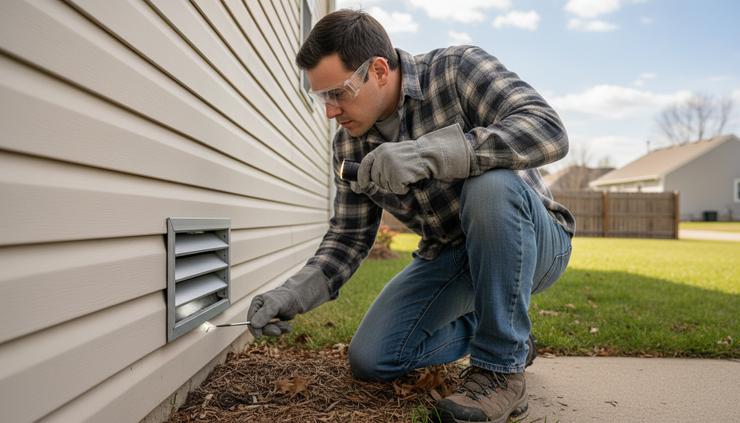
Vent work can involve ladders, sharp metal, droppings, dust, mites, and electrical or appliance hazards. Prepare before touching anything.
Wear the right protective gear
Use:
Work gloves
Eye protection
A well-fitting dust mask or respirator
Long sleeves
Closed-toe shoes with good grip
Bird droppings and dust can irritate the lungs and skin. Avoid shaking nesting material or using a leaf blower, shop vac, or compressed air in a way that sends debris into your face.
Turn off connected equipment
Before inspecting or cleaning, turn off the fan, range hood, or dryer connected to the vent. For dryers, unplug the unit if you plan to disconnect ducting indoors.
Never reach into a dryer vent while the dryer is running. Never work on a fan or vent with moving parts active.
Use ladder safety
If the vent is above ground level, use a stable ladder on firm, level ground. Keep three points of contact. Do not lean far sideways to reach a vent.
If the vent is near the roofline, above a walkout basement, or difficult to reach, call a professional. A nest removal is not worth a fall.
Avoid direct contact with birds
Do not handle adult birds, chicks, eggs, or nest material from an active nest. If a bird appears trapped, injured, or unable to leave the vent, contact a wildlife rehabilitator or licensed wildlife control provider.
When to call a professional
Some jobs are better handled by someone with the right tools and permits.
Call a wildlife control or vent cleaning professional if:
Birds are active in the vent
You hear chicks inside
The vent is high or hard to access
The duct is long, twisted, or hidden
The vent serves a dryer and airflow is poor
You suspect birds are trapped
You are unsure what species is nesting
The nest is in a roof, soffit, or attic vent
A good professional should focus on humane exclusion, legal compliance, and proper vent repair. They should not simply trap birds inside or seal a vent without confirming it is clear.
How to prevent birds from nesting in vents again
Prevention works best after the vent is clear and the nesting season issue has been resolved. The goal is to keep airflow open while blocking access.
Install the right vent cover
Use a cover designed for the specific vent. It should open easily when air flows out and close securely when the fan or appliance is off.
For dryer vents, avoid covers with screens that collect lint. A louvred or flap-style dryer vent cover is often safer, as long as it moves freely and is checked often.
For bathroom and kitchen exhaust vents, exterior hoods or covers with built-in pest guards may help, provided they do not restrict airflow.
Inspect vents at the start of spring
Birds often search for nesting spots in spring. A quick seasonal check can catch damage before a nest appears.
Look for:
Missing flaps
Loose screws
Cracked plastic
Gaps around the vent
Twigs near the opening
Droppings below the wall
Make this part of regular home maintenance, along with cleaning gutters and checking dryer lint buildup.
Seal gaps beside the vent
Birds do not always enter through the main opening. They may squeeze into gaps around poorly sealed vent hoods.
Use exterior-grade sealant around the vent mounting plate where appropriate. Do not seal the vent opening itself. The duct still needs to exhaust air freely.
Keep nearby ledges less attractive
Trim branches that touch the house or create easy perches near vents. Remove old nesting material from nearby ledges once it is legal and safe to do so.
Avoid leaving loose fibres, pet hair, grass clippings, or straw near the home during nesting season. Birds may use these materials to build nearby.
Keep up with dryer vent cleaning
A lint-clogged dryer vent may hold nesting material more easily. Clean the lint trap after each load and schedule periodic vent cleaning based on use.
If clothes take longer to dry or the laundry room feels unusually humid, check the vent. Slow drying is often an early warning sign.

A safe vent is clear, legal, and protected
Bird nests in external vents need a careful response. Rushing to remove material can harm birds, break wildlife laws, or push debris deeper into the duct. Waiting too long can leave the home with poor airflow, moisture problems, or appliance risks.
A few minutes of prevention each season can keep vents open, protect the home, and give birds a better chance of nesting where they belong.


Comments